
12 Differences Between the Male and Female Brain (Part 1 of 2)
And why it’s important to understand them


Ever been curious about how the male and female brain differ?
The discussion about the differences between the male and the female brain can quickly devolve into a slinging match between people - and researchers.
‘Nurture’ followers prefer the idea that we become what our environment moulds us into, and ‘nature’ followers prefer the idea that our genes mould us.
Fortunately most reasonable people concede that it’s a combination of the two, and research supports this conclusion.
Our innate instincts and biases in relation to brain function are magnified by the different sorts of environments and learning that the brain is exposed to, which include our role models, what we do, physically, and various kinds of reinforcement or discouragement which the brain is exposed to from birth.
We now know that nature and nurture are intricately and intimately interwoven – epigenetics is the name given to this process - whereby the environment acts on genes. For example, height and weight are both shaped by our environment, despite being given a genetic blueprint to start off with.

What happened next shocked me …
When I completed my PhD, which focused on female stress, I was invited to be on a radio show, that would be recorded and shared later.
This was an exciting opportunity for me because I’d just completed a very challenging academic journey, in which I’d navigated between three disciplines, and generated useful evidence.
After all, that’s why my PhD had been accepted into Adelaide medical school: my thesis project was a multi-disciplinary, translational one.
However, this was also during 2020, when the discussion around gender differences was becoming heated.
So, naively, I want into the radio interview, and excitedly shared what my research had revealed.
And then, the chat was never aired.
Silence.
I learned later that the host didn’t like what I’d said, so decided to discard it.
I had learned the first of many lessons around this topic:
> people don’t care about the facts - they want to feel comfortable that gender doesn’t matter,
> they prefer to shut down the conversation vs asking questions, and
> they refuse to concede that gender differences are an important issue to discuss because when we understand what the differences are we ALL benefit.
So, now, I preface every training session about gender differences with a specific phrase.
Regardless of who the training’s for.
Also, every podcast where the topic is raised, or every workshop I run for organisations who want to understand the differences between men and women, especially as it relates to stress.

And here it is:
‘The male and female brain have more similarities than differences BUT the differences are important and noticeable.’
The research shows that the differences are statistically significant, but they’re not huge.
Another caveat I use, is that there are also subtle ways that we treat boys differently to girls so culture does have a role to play in how these differences manifest too.
Our behaviours also reflect subtle differences in how we treat children of different genders.
So, our environment, which includes the culture we grow up in, will also impact what we learn and how we behave as either men or women.
This topic has been hotly-debated for many years, with a recent study, titled:
‘Dump the “dimorphism”: Comprehensive synthesis of human brain studies reveals few male-female differences beyond size’ saying it all. (Eliot, L et al, 2021)
However, a comprehensive analysis of all the current data, including the study above, peer-reviewed and published in 2022 concluded with an in-depth analysis of the data, which includes the following statement:
‘ … comparing the results from multiple large direct analyses highlights small, highly reproducible sex differences in the volume of many brain regions (controlling for brain size). (DeCasien AR, et al, 2022)
There are therefore subtle but important differences in our brain neurophysiology which impact cognition, perception and behaviour.
And a global study that examined rates of psychological stress in 149 countries found that men and women are both battling with high-levels of psychological stress, so I think tackling this contentious issue is timely. (Piao X, et al, 2024)

Let’s get into the details …
Please note, these items are not listed in order of importance, but rather in a way that builds on the facts.
1) The male brain is 8 – 10% bigger than the female brain, and also weighs 11-12% more, with researchers suggesting hormonal differences and larger volume in some brain areas are responsible for this difference. (DeCasien AR, et al, 2022)
What does this mean? The difference in size does not correspond to a difference in intellect. However, female brains are more susceptible to dementia, which may be related to this difference in size, although hormonal factors are also linked to this phenomena.
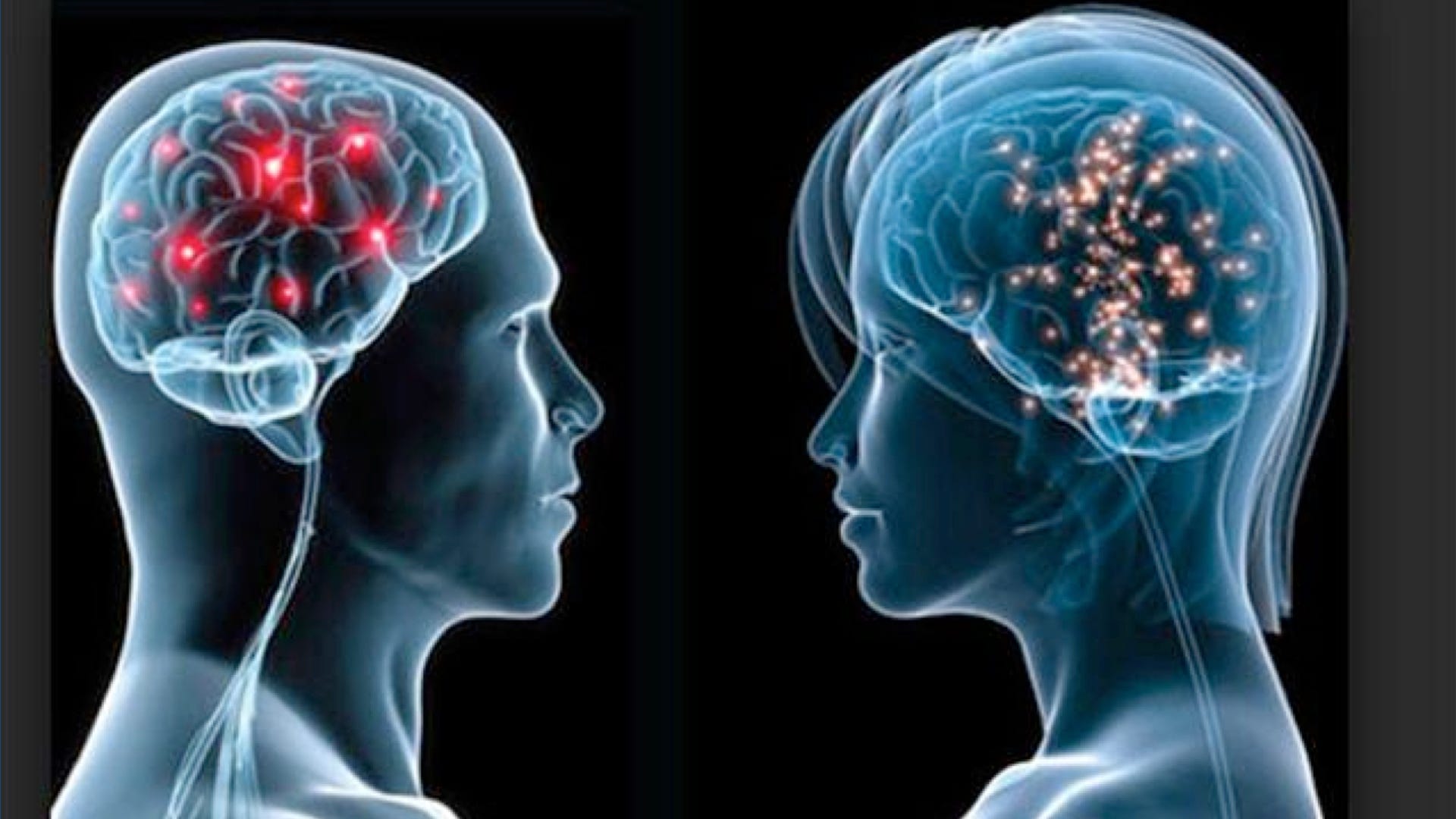
2) The female brain is busier compared to the quieter male brain. A large SPECT (Single Photon Emission Computed Tomography) study, that examined blood flow and activity in specific areas of 46 000 male and female brains revealed that female brains were significantly busier than male brains in 70/80 areas examined. (Amen DG et al, 2017)
What does this mean? Increased blood flow and activity signifies increased connectivity between many brain regions. This influences brain function in a number of interesting ways, which we’ll explore going forward.
In addition, some researchers suggest this is why women tend to be more collaborative, exhibit more empathy and intuition, compared to men, but also why they are more vulnerable to affective disorders like anxiety, depression and post traumatic stress disorder (PTSD).
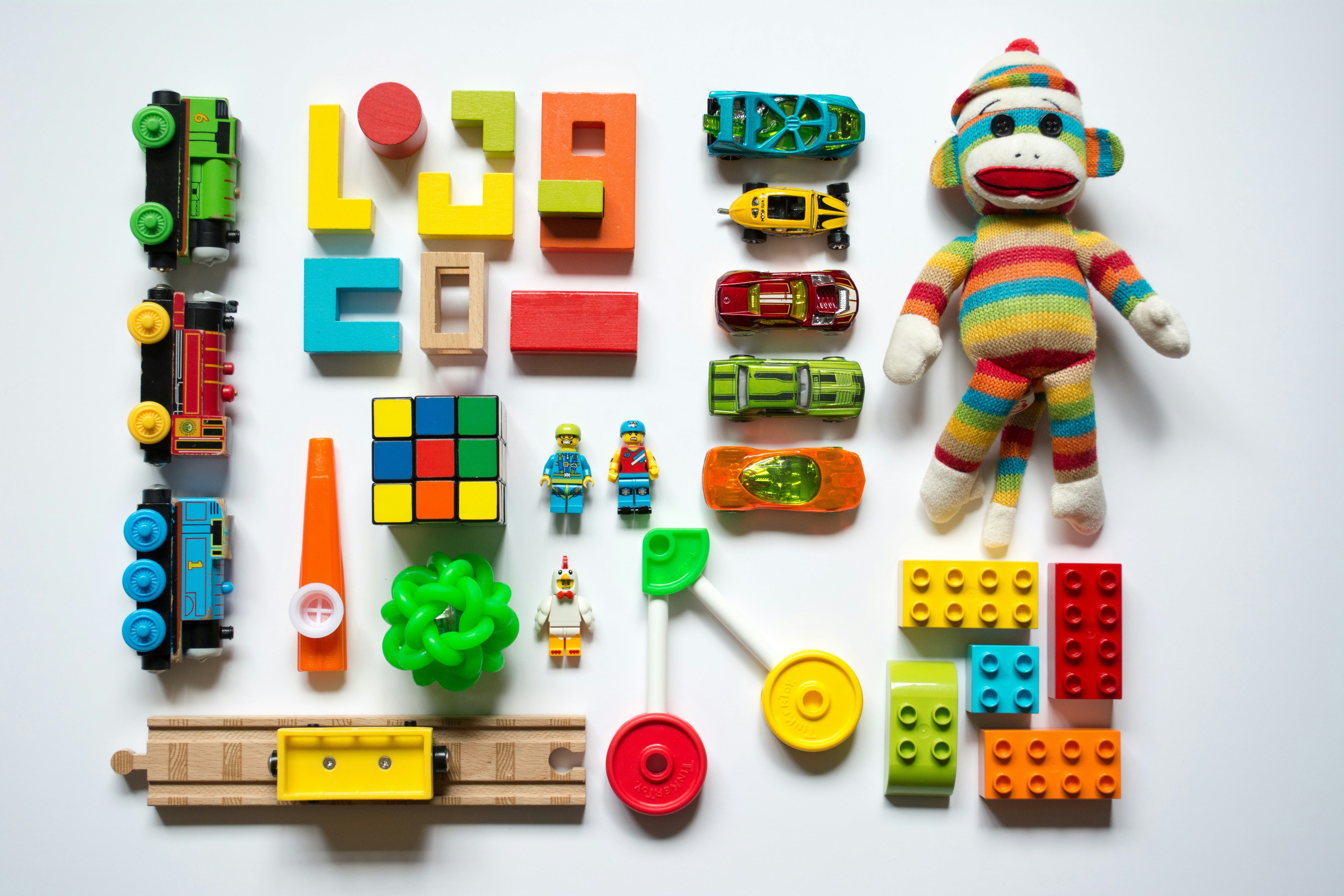
3) It seems that boys prefer different toys to the ones girls prefer. Animal-research findings high-lighted a preference for specific toys that was dependent on gender. In the studies that examined rhesus and vervet monkeys, respectively, researchers found that males strongly preferred toys with wheels over fluffy toys, compared to the females who found fluffy toys preferable. (Hassett JM et al, 2008; Gerianne M & Hines M, 2002)
Human parental influence can be excluded from these kinds of animal studies, so the argument that parents unconsciously guide toy preference is clearly not valid.
Indeed, in human studies, similar results were revealed:
Boys and girls in a research study starting at 9 months old, which is also an age when children don’t show signs of recognising their own or others gender, showed a marked difference in their preference for stereotypically male versus stereotypically female toys. (Todd, BK et al, 2017)
Researchers suggest that we’re drawn to different toys depending on our gender because boys are more active generally, and are therefore drawn to toys that require manipulation and physical activity, like balls, cars, bicycles etc.
Females on the other hand may find dolls more interesting due to a generally stronger social orientation or due to an innate attraction to infants.
‘ … toy preferences reflect preferences for specific activities, such as active manipulation or cradling, facilitated by specific features of toys and that these activity biases result from the different prenatal hormonal environments of boys and girls. According to this perspective, boys’ and girls’ toy preferences reflect differences in their preference for specific activities and they thus seek out toys that facilitate those preferred activities. The “pink” and “blue” aisles in toy stores thus reflect marked gender preferences for activities and not necessarily societal imposition of gender norms on boys and girls…’ (Hassett JM, et al, 2008)
One of the challenges with boys and men preferring more active, and often physically risky activities, is that they are significantly more likely to suffer from traumatic brain injuries (TBIs) than girls. (Gupte R, et al, 2019)
What does this mean? Trying to change what children naturally gravitate to in relation to toys isn’t necessarily something you can or should try to influence as a parent or educator. However, parents of boys (and girls) can take extra care to protect against TBIs when their children want to engage in potentially dangerous sports.
4) Differences in visuospatial skills and processing speed between genders are interesting too.
Generally men have superior visuospatial skills. This simply means they’re better at visualising what happens when a complicated two- or three-dimensional shape is rotated in space; they correctly determine angles from the horizontal; they’re better at tracking moving objects and at aiming projectiles. (Gur RC & Gur RE, 2017; Lager E, et al, 2024)
In addition, other research highlights that men generally prefer working with things, while women prefer working with people:
‘ … with men preferring working with things and women preferring working with people. The effect size of this gender difference in interests was close to one standard deviation, and among the largest reported in the literature of individual differences … Interests in people-oriented careers may explain women’s underrepresentation in some STEM fields, which are typically things-oriented…’ (Su R & Rounds J, 2015)
Furthermore, in academic publishing, the same trend persists:
‘ … Findings consistently show that women, on average, perceive and orient towards people with greater psychological interest, whereas men, on average, are psychobehaviourally more oriented towards objects than women are …’ (Luoto, S, 2020)
In relation to verbal ability, a recent analysis revealed that women generally excel in a number of measures that examine verbal skills, and their reading comprehension and writing ability consistently exceeds that of men. (Hirnstein M, et al, 2023)
They also outperform men in tests of fine-motor coordination and perceptual speed and they’re more adept at retrieving information from long-term memory, and recall emotionally laden events faster than men.
‘ … One interpretation of the results is that the factors underlying sex differences in processing speed are not psychological but neurological or physiological in nature and therefore a wider variety of measures from these disciplines are needed for further studies.’ (Roivainen, E et al, 2021)

A contentious issue …
Most people gravitate to what they’re naturally good at doing. And although there is no difference in intellect between men and women, they will generally pursue activities where they feel competent.
Therefore, although women can equally successfully pursue science, technology, engineering and mathematics (STEM) subjects and careers as well as men can, they’re not (generally) necessarily attracted to them as much as men are. Many women gravitate more to people and relationship-orientated subjects and careers.
To highlight this natural tendency to pursue specific careers, in liberal secular Sweden, women predominate in medicine and social work while most engineering and construction jobs are done by men. (Merayo N & Ayuso A, 2022)
Some researchers have argued that this discrepancy is because countries that have less gender equality also often have little welfare support. This means that when gender equality is more prevalent, people choose what they want to pursue in relation to their career because there is not an unequal division of home and child care tasks.
The discussion therefore centres around increasing gender equality, so that more choices are open to women and consequently more women follow their interests.
So more women choosing nursing and teaching compared to more men choosing engineering and architecture as careers, suggest that our brains are shaping our choices as much our environment.
Conversely, other researchers argue that we are still subtly steering young girls and women away from STEM fields due to deeply entrenched, gender-based societal behaviour and trends. (Berggren, M & R. Bergh, R, 2025)
What does this mean? The ability to visualise objects and space in three dimensions may impact career choices and hobbies, eg. geometry, geography, most scientific pursuits, engineering, architecture, carpentry, car repair, surgery, sculpture, ball sports, map reading, driving.
Some traditionally female occupations, like fashion design and interior decorating, also rely on the ability to visualise objects and space optimally.
It therefore seems logical that men and women will naturally gravitate to games (such as specific toys, in Number 3) and later to careers and hobbies where they can use these skills because we naturally gravitate to what we’re good at.
This means that women may naturally gravitate to people and relationship-based careers. After all, the evidence (Number 4) indicates that women gravitate to people, while men gravitate to things.
However, it is important to consider that there may also be subtle ways we’re steering women away from traditionally male pursuits, and it’s important to keep this in mind and guard against it.
5) The corpus callosum (CCA) is the white-matter cable that crosses and connects the two hemispheres of the brain. It’s been an ongoing argument about whether the corpus callosum of males is smaller than that of females.
However, research has shown that, even controlling for brain size and age, the female CCA is significantly larger compared to the male CCA. (Ardekani BA, et al, 2013)
In addition, female brains consistently showed more strongly coordinated activity between hemispheres, while the males’ brain activity was more tightly coordinated within local brain regions. (Ingalhalikar M, et al, 2014)
This simply means that women’s brains are more highly coordinated between hemispheres (left and right hand side of the brain) whereas male brain activity is more highly coordinated in local regions, which may lead to the ability to focus on one topic, while female brains can seemingly focus on more than one topic concurrently.
This may contribute to why female brains are busier and faster, generally, (Number 2 and 4 respectively) and will also sustain the idea that women can multitask, when all they’re really doing is simply switching between tasks quickly.
What does this mean? Women are able to quickly jump between ideas, thoughts, and memories, because of the interconnectivity between their hemispheres.
It may look like multitasking, especially if others in the discussion haven’t caught up with the pace of thinking.
Practically, this means that a Mum can make dinner, help a child with homework, send a text to another child and do a load of washing, seemingly concurrently.
However, this may come at a cost when women are juggling too many things simultaneously, which we’ll examine in Number 11.

6) Aggression is one of the largest and most reliable indicators of gender differences – globally. Data from over 30 countries revealed that about 90% of people arrested for murder are men. (Global Study on Homicide, 2023)
Sex differences in this domain have been demonstrated in many studies, from questionnaires about hostile feelings to experiments where subjects were tested on willingness to deliver (fake) electric shocks to other people, to real-world events where attacks were reported by perpetrators or onlookers. (Im S, et al, 2018)
‘ … Analysis revealed lower aggression in dyads made up of two women than mixed dyads or those made up of two men. Crucially, men were an order of magnitude more likely than women to initiate increases in aggression, and brief experimentally imposed delays designed to block impulsive behaviour significantly reduced male aggression. Put simply, when higher levels of aggression were seen, men (usually) started it.’ (McCurry, AG et al, 2025)
However, research has highlighted that women may be more verbally aggressive online, compared to men, which suggests they may simply express aggression in non-physical ways. (Björkqvist, K et al, 1992; Walker, S, et al, 2000).
For example:
‘Specifically, relational aggression among females often takes the form of gossiping or spreading rumours, friendship betrayals, exclusion, and other manipulative behaviours that affect relationships, and many of these behaviours can be easily facilitated through cyberbullying …’ (Selkie EM, et al, 2016)
It’s likely that we’re observing similar behaviour with online aggression today, where many young girls, and women engage in subtle forms of aggression, or bullying. (Shrier, A, 2024)
What does this mean? So, it’s not necessarily different types of anger being expressed - it’s simply a different response to hostile feelings.
Women are seldom thought of as being aggressive, but their aggression may simply be expressed differently to male aggression, with technology providing a perfect way for women to be non-physically aggressive.
In addition, keep in mind that war is a male-created endeavour, in which physical aggression is key.

7) Differences in the desire to compete between genders has also elicited a lot of research and discussion, with early research suggesting that men are more comfortable with overt competition compared to women. (Niederle, M & Vesterlund, L, 2011)
However, a small, but more recent research project revealed that:
‘ … women enter competitions at the same rate as men when the incentive for winning includes the option to share part of the rewards with the losers.’ (Cassar, A & Rigdon, ML, 2021)
So it may simply be that women prefer to collaborate around winning, compared to men who don’t have that preference.
In an older study, researchers found that:
‘Women and men felt equally competitive overall, but men felt more competitive about athletics and sexual attention whereas women felt more competitive about looking attractive.’ (Cashdan E, 1998)
Similarly, researchers have proposed that:
‘ … Women usually compete for mates by advertising qualities valued by men (beauty and sexual exclusiveness) and by using indirect means of denigrating rivals (through gossip and stigmatisation)…’ (Campbell A, 2004)
Men and women also seem to have different appetite for competitive, physically risky activities, such as race car driving, rock climbing, etc.
Appetite for risk may also partly explain why there are more men in jail compared to women, although increased prefrontal cortex (PFC) activity - to be discussed in Number 10 - may also play a role in this phenomenon. (Grueter CC, et al, 2023)
What does this mean? Talented women may avoid competition and thus avoid opportunities to further their career goals.
However, in social interactions and competition, and possibly when competing for male attention, women are competitive but may not want to be seen as being such.
Trying to encourage women to compete in risky behaviour, like specific sports, may be unsuccessful partly due to their seemingly innate desire to avoid such activity, so self-selection into such sports may be a better indicator of true interest.
In Part 2 we’ll discuss the important role that hormones play in brain function, how the female limbic system influences emotions and interacts with hormones, how the active female PFC impacts decision-making, which includes an explanation about why more men are in jail vs women, the female experience of stress and finally, how women respond to nutrient supplementation differently to men, along with a summary and conclusion, and the full reference list.
Paying subscribers also receive a useful e-report at the end of Part 2 about ‘Nutrition to Restore Balance: The Role of Nutrition in Female Stress and Hormone Fluctuations.’
NOTE: None of this content was generated by AI.
To access Part 2 directly, please use the button below:
Nice piece. We see very clear physical differences between men and women, and attribute this, in part, to hormone exposure. We not only see this in humans, but we see this in animals as well.
So, it really seems odd to me that there is a movement to downplay these differences when it comes to brains. We need to recognize that differences in brains don't make one sex "superior" to another, but that they are just biologically different, and that is okay. We can still acknowledge that sexism does exist and that sociocultural factors shape brain development and also contribute to inequalities. But, we don't need to downplay, trivialize, or downright ignore the real biological differences.